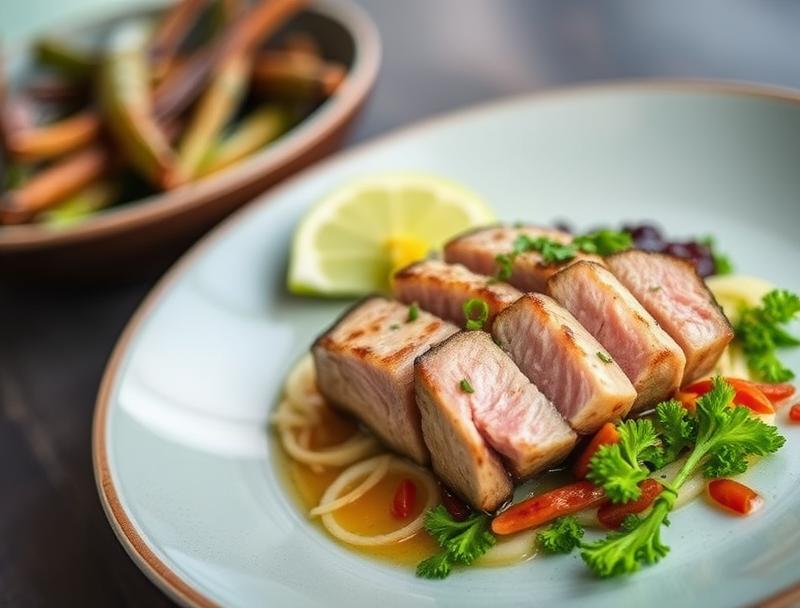
Perfect Pan-Seared Tuna – High Protein and Gorgeous
Introduction
Cooking the perfect pan-seared tuna is an art that combines ease, flavor, and creativity, all while utilizing everyday ingredients that can be found in most kitchens. This dish is not only a treat for the taste buds, but it’s also packed with protein, making it a great option for health-conscious individuals. The beauty of pan-searing tuna lies in its simplicity and the room it leaves for experimentation with various flavors and seasonings. Whether you’re a seasoned chef or a beginner in the culinary world, this recipe is designed to guide you through the process of creating a stunning and delicious pan-seared tuna dish that’s sure to impress.
Why This Works
- Flavor balance and ingredient accessibility: The combination of soy sauce, honey, lemon juice, and ginger creates a harmonious balance of sweet, sour, and savory flavors that complement the tuna perfectly. Moreover, these ingredients are easily accessible in most supermarkets, making this dish convenient to prepare.
- Ease of preparation: The steps involved in preparing the perfect pan-seared tuna are straightforward and require minimal effort. From preparation to plating, the process is designed to be simple and efficient.
- Impressive results with minimal effort: Despite the simplicity of the recipe, the end result is impressive and sure to delight both in terms of presentation and flavor. The searing process gives the tuna a beautiful crust on the outside while keeping it juicy and tender on the inside.
Ingredients
- 4 tuna steaks (about 6 oz each), preferably sushi-grade for the best flavor and texture
- 3 tablespoons honey, which adds a touch of sweetness to balance out the savory flavors
- 2 tablespoons soy sauce, providing a depth of umami flavor
- 1 tablespoon fresh lemon juice, adding a squeeze of freshness and acidity
- 1 teaspoon grated fresh ginger, contributing a warm, spicy flavor
- 2 cloves garlic, minced, for an added layer of depth without overpowering the dish
- 1 tablespoon olive oil, used for searing the tuna and adding a richness to the dish
- Salt and pepper, to taste, for seasoning and enhancing the natural flavors of the tuna
- Fresh parsley or chives, chopped (for garnish), adding a pop of color and freshness to the presentation
Instructions
- Step 1: Begin by preparing your ingredients. Chop the parsley or chives for garnish, grate the ginger, and mince the garlic. This step is crucial as it sets the stage for a smooth and efficient cooking process.
- Step 2: In a small bowl, whisk together the honey, soy sauce, lemon juice, grated ginger, and minced garlic to create the marinade. This mixture will be the backbone of your tuna’s flavor profile, so make sure to whisk it well to combine all the ingredients evenly.
- Step 3: Place the tuna steaks in a shallow dish and brush the marinade over both sides of the tuna, ensuring they are well coated. Let the tuna marinate for at least 15-20 minutes to allow the flavors to penetrate the meat. This step is where the magic happens, and the tuna starts to absorb all the delicious flavors of the marinade.
- Step 4: Heat the olive oil in a skillet over medium-high heat. Once the oil is hot, remove the tuna from the marinade, letting any excess liquid drip off. Place the tuna steaks in the skillet and sear for 2-3 minutes on each side for medium-rare, or until they reach your desired level of doneness. This step requires attention as the tuna can quickly go from perfectly cooked to overcooked.
- Step 5: Once the tuna is cooked to your liking, remove it from the heat and let it rest for a minute or two. This allows the juices to redistribute, making the tuna even more tender and flavorful. Slice the tuna into thick slices and garnish with chopped parsley or chives. Serve immediately and enjoy the fruits of your labor.
Handy Tips
- When shopping for tuna, look for sushi-grade or sashimi-grade tuna for the best results. This type of tuna is frozen to a certain temperature to kill parasites, making it safe to eat raw or lightly cooked.
- Don’t overmarinate the tuna, as this can make it too salty and overpowering. The marinade time suggested in the recipe is optimal for achieving a balanced flavor without compromising the natural taste of the tuna.
- For an added crunch, you can top the tuna with toasted sesame seeds or chopped nuts before serving. This not only adds texture but also enhances the visual appeal of the dish.
Heat Control
Heat control is crucial when pan-searing tuna. The ideal temperature for searing tuna is medium-high heat, which should be around 400°F to 450°F (200°C to 230°C). It’s essential to not overcrowd the skillet, as this can lower the temperature of the oil and result in uneven cooking. Cook the tuna steaks one or two at a time, depending on the size of your skillet, to ensure they have enough room to cook evenly. The cooking time will depend on the thickness of the tuna and your desired level of doneness. For medium-rare, cook for 2-3 minutes per side. Always use a thermometer to check the internal temperature of the tuna; it should be at least 145°F (63°C) for food safety.
Crunch Factor
Achieving the perfect crunch on the outside while maintaining tenderness on the inside is the hallmark of well-cooked pan-seared tuna. The crunch factor comes from the searing process, where the high heat quickly cooks the outer layer of the tuna, creating a crispy crust. To enhance this crunch, make sure the skillet is hot before adding the tuna, and don’t move the tuna too much during the searing process. Let it develop a nice crust on one side before flipping it over. Additionally, topping the tuna with crunchy elements like toasted sesame seeds or chopped nuts can add an extra layer of texture to the dish.
Pro Kitchen Tricks
- Use a cast-iron or stainless steel skillet for the best sear. These materials retain heat well and can achieve the high temperatures needed for a perfect crust on the tuna.
- Pat the tuna dry with a paper towel before searing to remove excess moisture. This helps create a better crust and prevents the tuna from steaming instead of searing.
- Don’t press down on the tuna with your spatula while it’s cooking. This can squeeze out juices and make the tuna tough. Instead, let it cook undisturbed for the first couple of minutes to develop a nice crust.
Storage Tips
- Leftover tuna should be stored in an airtight container in the refrigerator and consumed within a day or two. It’s best to store it in a container that prevents moisture from accumulating, which can make the tuna soggy.
- For reheating, it’s best to use a low-heat method to prevent overcooking. You can reheat the tuna in the oven at a low temperature (around 200°F or 90°C) for a few minutes, or use a toaster oven for more precise control.
- Avoid freezing cooked tuna, as this can affect its texture and make it less palatable. If you must freeze it, make sure it’s cooled completely first, and then freeze it in an airtight container or freezer bag.
Gift Packaging Ideas
If you’re considering gifting your pan-seared tuna, perhaps as part of a gourmet meal kit or a seafood basket, presentation is key. You can package the tuna in a decorative tin or a wooden box, garnished with fresh herbs and accompanied by a side of wasabi and soy sauce for a complete sushi experience. Adding a bottle of wine or sake can also elevate the gift, pairing nicely with the tuna for a special occasion.
Flavor Variations
- Different spices: Experiment with various spices like cumin, coriander, or smoked paprika to give your tuna a unique flavor profile. These spices can add a smoky, earthy, or slightly sweet dimension to the dish.
- Creative toppings: Consider topping your tuna with different ingredients like diced mango, avocado, or pickled ginger. These toppings can add freshness, creaminess, or a tangy flavor to the dish, making it more interesting and dynamic.
- Ingredient swaps: For a different twist, you can swap the honey with maple syrup or the soy sauce with tamari for a gluten-free option. These swaps can change the flavor profile slightly, offering a new experience without deviating too far from the original recipe.
Troubleshooting
- Texture problems: If your tuna turns out too tough, it might be overcooked. Try reducing the cooking time or checking the internal temperature more frequently to achieve your desired level of doneness.
- Ingredient replacements: If you can’t find fresh ginger, you can use ground ginger as a substitute, though the flavor will be slightly different. Similarly, if soy sauce is not available, you can use tamari or coconut aminos as alternatives.
- Over/undercooking signs: Overcooked tuna will be dry and tough, while undercooked tuna will be raw and potentially unsafe to eat. Always check the internal temperature and the color of the tuna to ensure it’s cooked to a safe temperature and your desired level of doneness.
FAQs
- Can I freeze it? It’s not recommended to freeze cooked tuna, as it can affect the texture and quality. However, if you must freeze it, make sure it’s cooled completely first and then freeze it in an airtight container or freezer bag.
- Is it gluten-free? The recipe as given is gluten-free, thanks to the use of gluten-free soy sauce or tamari. However, always check the ingredients of your soy sauce or any store-bought marinades to ensure they are gluten-free.
- Can I double the recipe? Yes, you can easily double or triple the recipe for a larger group. Just remember to adjust the cooking time slightly if you’re cooking more tuna steaks, and make sure not to overcrowd the skillet.
Conclusion
Cooking the perfect pan-seared tuna is a skill that, with a little practice, can become second nature. The key to success lies in the balance of flavors, the quality of the ingredients, and the attention to detail during the cooking process. Don’t be afraid to experiment with different seasonings and toppings to make the dish your own, and remember, the most important ingredient in any recipe is the love and care you put into preparing it. Whether you’re cooking for yourself or for a crowd, this pan-seared tuna recipe is sure to delight, offering a culinary experience that’s both healthy and indulgent. So, go ahead, give it a try, and enjoy the perfect blend of flavors and textures that pan-seared tuna has to offer.
Perfect Pan-Seared Tuna – High Protein and Gorgeous
A simple and delicious recipe for pan-seared tuna, packed with protein and flavor, using everyday ingredients.
🥘 Ingredients
👩🍳 Instructions
-
1Prepare ingredients by chopping parsley, grating ginger, and mincing garlic.
-
2Whisk together honey, soy sauce, lemon juice, grated ginger, and minced garlic for the marinade.
-
3Marinate the tuna steaks in the mixture for at least 15-20 minutes.
-
4Heat olive oil in a skillet over medium-high heat and sear the tuna for 2-3 minutes per side or until cooked to desired doneness.
-
5Let the tuna rest for a minute before slicing and serving, garnished with chopped parsley or chives.