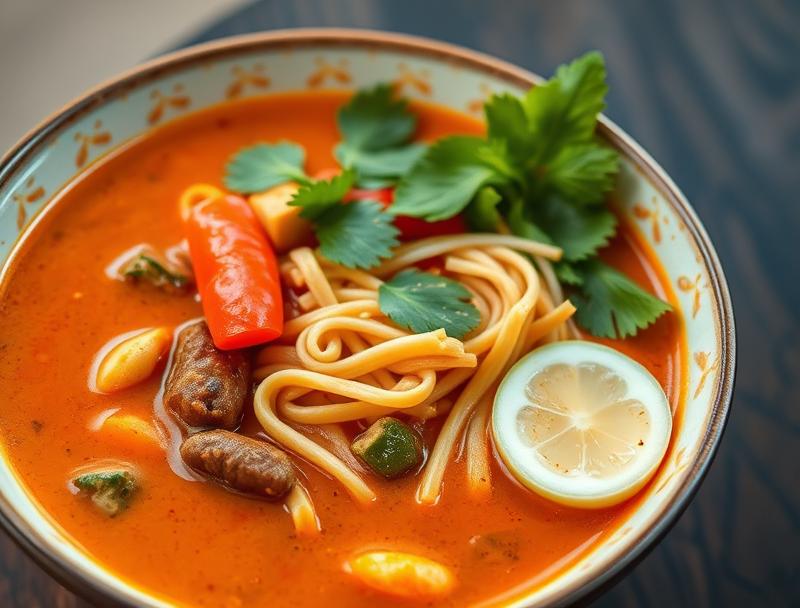
Flavorful Thai Red Curry Noodle Soup
Introduction
Imagine a dish that combines the warmth of Thai spices, the comfort of a hearty noodle soup, and the ease of preparation that fits into even the busiest of schedules. The Flavorful Thai Red Curry Noodle Soup is exactly that – a culinary masterpiece that brings together the rich flavors of Thailand with the simplicity of a one-pot meal. Using everyday ingredients and a few creative twists, this recipe transforms a typical weeknight dinner into an exotic culinary adventure. It’s a perfect blend of ease, flavor, and creativity, making it accessible to anyone looking to spice up their meal routine.
Why This Works
- Flavor balance and ingredient accessibility: The beauty of this recipe lies in its ability to balance bold, aromatic flavors with easily accessible ingredients, making it a staple for both beginners and seasoned cooks.
- Ease of preparation: Despite its complex flavor profile, the dish is surprisingly easy to prepare, requiring minimal prep time and effort, perfect for a quick dinner or lunch.
- Impressive results with minimal effort: What sets this recipe apart is its ability to deliver impressive, restaurant-quality results with remarkably little effort, making it ideal for entertaining or special occasions.
Ingredients
- 2 tablespoons of vegetable oil
- 2 medium onions, diced
- 3 cloves of garlic, minced
- 1 tablespoon grated fresh ginger
- 2 tablespoons Thai red curry paste
- 2 cups of chicken or vegetable broth
- 1 can of coconut milk
- 1 teaspoon soy sauce
- 1 teaspoon fish sauce (optional)
- 1/2 teaspoon sugar
- Salt and pepper, to taste
- 8 oz rice noodles
- 2 cups mixed vegetables (bell peppers, carrots, green beans)
- 2 boneless, skinless chicken breasts, cut into bite-sized pieces
- Fresh basil leaves, chopped (for garnish)
- Lime wedges, for serving
Instructions
- Step 1: Preparation – Begin by chopping the onions, garlic, and ginger. Cut the chicken into bite-sized pieces and set aside. Prepare the mixed vegetables according to your preference (slice, dice, etc.).
- Step 2: Cooking the Aromatics – In a large pot, heat the oil over medium heat. Add the diced onions and cook until they are translucent, about 5 minutes. Then, add the minced garlic and grated ginger, cooking for another minute until fragrant.
- Step 3: Adding the Curry Paste and Broth – Add the Thai red curry paste to the pot, stirring constantly for about 1 minute to allow the paste to release its flavors. Then, pour in the broth, scraping the bottom of the pot to release any browned bits. Bring the mixture to a simmer.
- Step 4: Adding Coconut Milk and Seasonings – Reduce the heat to low and add the coconut milk, stirring gently to combine. Add the soy sauce, fish sauce (if using), and sugar. Let the soup simmer for about 10 minutes to allow the flavors to meld together.
- Step 5: Cooking the Noodles and Chicken – While the soup is simmering, cook the rice noodles according to the package instructions. Typically, this involves soaking them in hot water for a few minutes until they are soft and pliable. Add the chicken to the soup and cook until it is fully cooked and the internal temperature reaches 165°F.
- Step 6: Final Touches – Add the mixed vegetables to the pot and cook until they are tender but still crisp. Stir in the cooked noodles and season the soup with salt and pepper to taste.
- Step 7: Serving – Serve the soup hot, garnished with chopped fresh basil leaves and a squeeze of lime juice. Offer additional lime wedges on the side for those who prefer a bit more acidity.
Handy Tips
- For a spicier soup, add more curry paste or introduce some red pepper flakes.
- To make the dish vegetarian or vegan, substitute the chicken with tofu or tempeh and use a vegetable broth.
- Experiment with different types of protein like shrimp or pork for varied flavors.
- Always taste as you go and adjust the seasoning accordingly to ensure the best flavor balance.
Heat Control
Maintaining the right heat is crucial for this recipe. When cooking the aromatics, medium heat is ideal to prevent burning. Once the curry paste is added, reduce the heat to prevent it from becoming too dark or bitter. For the simmering process, low heat ensures that the flavors meld together slowly and that the coconut milk doesn’t separate or boil too vigorously.
Crunch Factor
Achieving the right texture is key to the dish’s appeal. The mixed vegetables should retain some crunch, while the noodles should be soft but not mushy. Cooking the noodles just until they are al dente and then rinsing them with cold water can help prevent them from becoming too soft. For the vegetables, adding them towards the end of the cooking time preserves their texture.
Pro Kitchen Tricks
- Use high-quality curry paste for the best flavor. Freshness matters, so try to use a recently opened jar or make your own if possible.
- Don’t overcook the chicken or noodles, as this can lead to a tough, unappetizing texture.
- For easier cleanup, cook the noodles in a separate pot and then add them to the soup, reducing the risk of starches sticking to the bottom of the pot.
Storage Tips
- The soup can be stored in the refrigerator for up to 3 days. Reheat it gently over low heat, adding a bit more broth if it has thickened too much.
- For freezing, it’s best to freeze the soup without the noodles. When you’re ready to serve, thaw the soup and then add freshly cooked noodles.
- Use airtight containers to store leftovers, ensuring they stay fresh and do not absorb other flavors from the refrigerator.
Gift Packaging Ideas
While soup is typically not the first choice for gifting, the components of this recipe can be packaged in a thoughtful way. Consider gifting a kit that includes a jar of homemade curry paste, a packet of rice noodles, and a few fresh ingredients like lemongrass or lime leaves, along with the recipe. Alternatively, package the cooked soup in insulated containers for a ready-to-eat gift, perfect for someone feeling under the weather or in need of a comforting meal.
Flavor Variations
- Different spices: Introduce a smoky flavor with a bit of cumin or coriander, or add some heat with cayenne pepper.
- Creative toppings: Offer a variety of toppings like toasted peanuts, diced green onions, sliced lime wedges, or pickled ginger to allow each person to customize their bowl.
- Ingredient swaps: Substitute chicken with beef or pork for a different protein flavor, or use different types of noodles like egg noodles or udon for a varied texture.
Troubleshooting
- Texture problems: If the soup becomes too thick, add a bit more broth. If it’s too thin, simmer it for a few more minutes to reduce the liquid.
- Ingredient replacements: If you can’t find Thai red curry paste, you can make a substitute by blending together red pepper flakes, garlic, lemongrass, galangal, and coriander.
- Over/undercooking signs: Check the chicken for doneness by ensuring it reaches 165°F internally. Noodles should be soft but still retain some bite; overcooking makes them mushy.
FAQs
- Can I freeze it? Yes, but it’s best to freeze the soup without the noodles and then add freshly cooked noodles when reheating.
- Is it gluten-free? This recipe is gluten-free, making it suitable for those with gluten intolerance, but always check the ingredients of the curry paste and broth to ensure they are gluten-free.
- Can I double the recipe? Yes, simply double all the ingredients. Be mindful of the pot size to ensure there’s enough room for the ingredients to simmer properly.
Conclusion
The Flavorful Thai Red Curry Noodle Soup is a versatile and delicious dish that can elevate any meal. With its rich, aromatic flavors and comforting warmth, it’s perfect for cozy nights in or special occasions. Feel free to experiment with the recipe, making it your own by adjusting the spice level, adding your favorite vegetables, or trying different proteins. The beauty of cooking lies in its creativity and sharing, so don’t hesitate to adapt this recipe to your taste and share it with friends and family. Happy cooking!