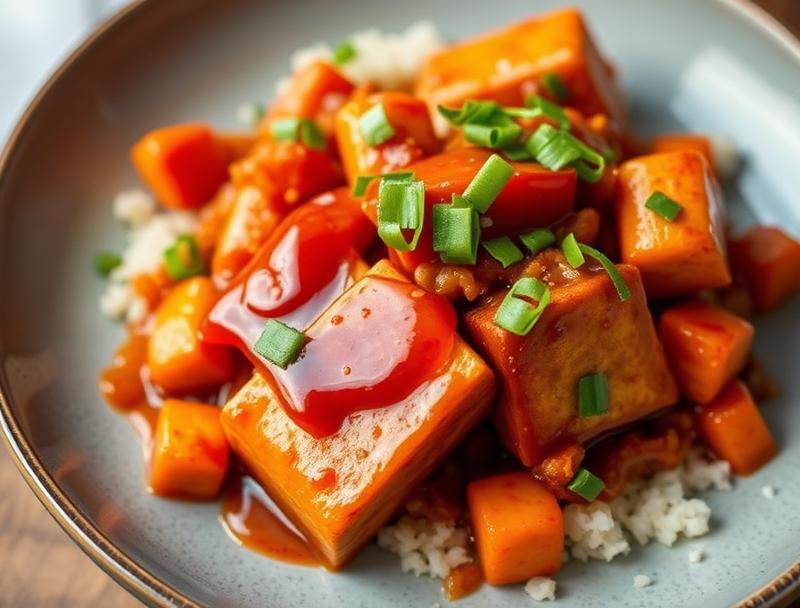
Best Gochujang Korean Tofu: A Flavorful Vegan Delight
Introduction
Imagine a dish that is not only easy to make but also packed with flavor, using everyday ingredients that you might already have in your pantry. The Best Gochujang Korean Tofu is a vegan delight that combines the savory, sweet, and spicy flavors of Korean chili paste, or gochujang, with the versatility of tofu. This recipe is perfect for those looking to explore the world of vegan cuisine or simply seeking a new, exciting flavor profile to add to their meal rotation. With its ease of preparation and impressive results, this dish is sure to become a favorite, whether you’re a seasoned chef or a beginner in the kitchen.
Why This Works
- Flavor balance and ingredient accessibility: The combination of gochujang, soy sauce, maple syrup, and rice vinegar creates a harmonious balance of sweet, savory, and spicy flavors, all of which are easily accessible in most grocery stores.
- Ease of preparation: This recipe requires minimal preparation time, making it perfect for busy days or when you need a quick yet satisfying meal.
- Impressive results with minimal effort: Despite its simplicity, the dish presents beautifully and tastes complex, making it ideal for serving to guests or enjoying as a special treat.
Ingredients
- 1 block of firm or extra-firm tofu, drained and cut into bite-sized pieces
- 2 tablespoons of gochujang (Korean chili paste)
- 1 tablespoon of soy sauce
- 1 tablespoon of maple syrup
- 1 tablespoon of rice vinegar
- 1 teaspoon of grated fresh ginger
- 2 cloves of garlic, minced
- 1 tablespoon of olive oil
- Sesame seeds and chopped green onions for garnish (optional)
- Salt and pepper, to taste
Instructions
- Step 1: Begin by preparing your ingredients. Drain and cut the tofu into bite-sized pieces. Grate the ginger and mince the garlic. In a small bowl, whisk together the gochujang, soy sauce, maple syrup, and rice vinegar until smooth.
- Step 2: Heat the olive oil in a large skillet or wok over medium-high heat. Add the tofu and cook until golden brown on all sides, about 5-7 minutes. Remove the tofu from the skillet and set aside.
- Step 3: In the same skillet, add the grated ginger and minced garlic. Cook for 1 minute, stirring constantly, until fragrant. Then, pour in the gochujang sauce and bring to a simmer. Let cook for about 2-3 minutes, or until the sauce has thickened slightly.
- Step 4: Add the cooked tofu back into the skillet, tossing to coat evenly with the gochujang sauce. Cook for an additional 1-2 minutes, until the tofu is well coated. Season with salt and pepper to taste. Garnish with sesame seeds and chopped green onions if desired.
Handy Tips
- For an extra crispy exterior on the tofu, coat the tofu pieces in a mixture of cornstarch and spices before cooking.
- Adjust the level of spiciness to your liking by adding more or less gochujang.
- Consider adding other vegetables like bell peppers, carrots, or mushrooms to the skillet with the ginger and garlic for added flavor and nutrition.
Heat Control
When cooking the tofu and the gochujang sauce, it’s important to maintain a medium-high heat to achieve a nice caramelization on the tofu and to reduce the sauce to the desired thickness. However, be cautious not to burn the sauce or overcook the tofu. Ideal cooking times and temperatures will depend on your specific stove and skillet, so adjust as necessary and keep a close eye on the dish as it cooks.
Crunch Factor
This dish can have a delightful crunch from the sesame seeds used as a garnish and from the exterior of the tofu if it’s coated and cooked to a crispy perfection. To enhance the crunch factor, ensure the tofu is cooked at the right temperature and for the right amount of time. Additionally, toasted sesame seeds can add a deeper nutty flavor and crunchier texture.
Pro Kitchen Tricks
- Pressing the tofu before cutting it into pieces can help remove excess moisture, leading to a crisper exterior when cooked.
- Using a non-stick skillet can prevent the tofu and sauce from sticking and make cleanup easier.
- Letting the gochujang sauce simmer for a few minutes can enhance its flavor and thickness, making it cling better to the tofu.
Storage Tips
- This dish can be stored in an airtight container in the refrigerator for up to 3 days. Reheat gently in a skillet or in the microwave until warmed through.
- For longer storage, consider freezing the cooked tofu and sauce separately. When ready to eat, thaw overnight in the refrigerator and reheat as desired.
- When storing, it’s best to keep the tofu and sauce separate to prevent the tofu from becoming soggy.
Gift Packaging Ideas
While this dish is primarily meant to be enjoyed fresh, components of it can be packaged as gifts, such as the gochujang sauce or a kit containing the necessary ingredients for the recipe. Consider packaging the sauce in decorative jars and pairing it with a recipe card and other Korean staples like rice or kimchi for a unique and thoughtful gift.
Flavor Variations
- Different spices: Experiment with adding other spices or herbs like cumin, coriander, or basil to the gochujang sauce for unique flavor profiles.
- Creative toppings: Add some crunch with toasted nuts or seeds, freshness with diced green onions or cilantro, or spiciness with sliced jalapeños.
- Ingredient swaps: Substitute the tofu with tempeh or seitan for different textures, or use different types of vinegar or sweeteners in the sauce.
Troubleshooting
- Texture problems: If the tofu is too soggy, it may have been overcooked or not pressed properly before cooking. If too dry, it might have been overcooked or cooked at too high a heat.
- Ingredient replacements: If you can’t find gochujang, you can make a substitute by mixing gochugaru (Korean chili flakes) with soy sauce, brown sugar, garlic, and rice vinegar.
- Over/undercooking signs: The tofu should be golden brown and crispy on the outside, and the sauce should be thick and sticky. If the sauce is too thin, simmer it for a few more minutes. If too thick, add a little water or vinegar.
FAQs
- Can I freeze it? Yes, you can freeze the cooked tofu and sauce separately for up to 2 months. Thaw and reheat as needed.
- Is it gluten-free? This recipe is gluten-free as long as you use gluten-free soy sauce. Many brands now offer gluten-free options.
- Can I double the recipe? Yes, you can easily double or triple this recipe for larger groups. Just adjust the cooking time slightly to ensure everything is cooked through and the sauce has thickened appropriately.
Conclusion
The Best Gochujang Korean Tofu is a recipe that embodies the perfect blend of ease, flavor, and creativity, making it a must-try for anyone looking to spice up their meal routine. With its accessible ingredients and straightforward instructions, this dish is approachable for cooks of all levels. Feel free to experiment with the recipe, adjusting the spice level or adding your favorite vegetables to make it your own. Whether you’re serving it as a main course, side dish, or packing it for lunch, this gochujang tofu is sure to delight with its bold, savory flavor and satisfying texture. So go ahead, give it a try, and enjoy the flavorful world of Korean-inspired vegan cuisine!