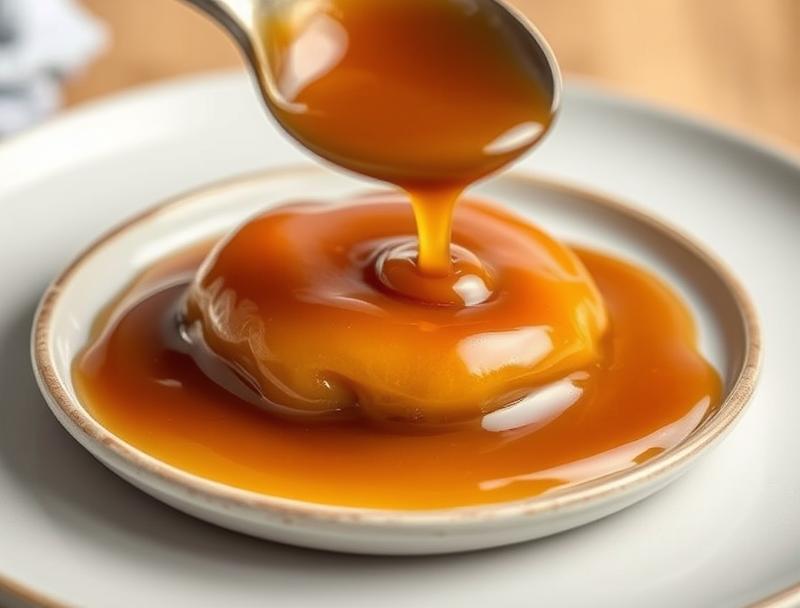
Homemade Caramel Sauce
Introduction
Making homemade caramel sauce is a game-changer for anyone who loves baking, cooking, or simply indulging in sweet treats. It’s surprisingly easy to make, using everyday ingredients that you likely have in your pantry. The best part? The depth of flavor and richness you get from homemade caramel sauce is unparalleled, and it’s incredibly versatile. Whether you’re drizzling it over ice cream, using it as a filling for cakes and pastries, or as a topping for fresh fruits, this sauce elevates any dessert to the next level. With just a few ingredients and some basic kitchen equipment, you can create a world of caramel delights.
Why This Works
- The balance of sugar, butter, and cream creates a perfectly smooth and velvety texture, with a deep caramel flavor that’s not too sweet or overpowering.
- The preparation is straightforward and requires minimal effort, making it accessible to cooks of all skill levels. You simply need to melt sugar, butter, and cream together, stirring occasionally, until you reach the perfect caramel color and consistency.
- The impressive results you get from making your own caramel sauce will make you wonder how you ever relied on store-bought versions. It’s a simple process that yields professional-quality results, perfect for impressing friends and family with your baking and cooking skills.
Ingredients
- 1 cup granulated sugar
- 1/2 cup heavy cream
- 1/4 cup unsalted butter, cut into small pieces
- 1 teaspoon sea salt
- 1 tablespoon vanilla extract (optional, for flavor)
Instructions
- Step 1: Begin by preparing your ingredients. This includes measuring out the sugar, cream, butter, and salt. If you’re using vanilla extract for added flavor, have that ready as well.
- Step 2: In a medium saucepan, combine the sugar, butter, and salt. Place the saucepan over medium heat and cook, stirring occasionally, until the sugar has dissolved.
- Step 3: Once the sugar has dissolved, increase the heat to medium-high and bring the mixture to a boil. Use a candy thermometer to monitor the temperature. For caramel sauce, you’re aiming for the soft-ball stage, which is between 235°F and 240°F (118°C to 115°C).
- Step 4: As the mixture approaches 235°F, reduce the heat to medium-low to prevent it from burning. Slowly pour in the heavy cream, being cautious as the mixture will bubble up and steam vigorously. If using vanilla extract, add it now. Continue cooking for about 5 minutes, stirring constantly, until the sauce has thickened slightly and turned a deep amber color.
Handy Tips
- Always use a heavy-bottomed saucepan, as this distributes heat evenly and prevents hot spots that can cause the caramel to burn.
- Don’t stir the caramel too much in the early stages, as this can cause it to crystallize. Instead, gently tilt the pan to distribute the heat.
- If you don’t have a candy thermometer, you can test the caramel by dropping a small amount of the mixture into a cup of cold water. If it forms a soft ball that flattens when removed from the water, it’s ready.
Heat Control
Heat control is crucial when making caramel sauce. The ideal temperature for caramel sauce is between 235°F and 240°F. If the caramel exceeds 240°F, it can quickly become too dark and develop a bitter flavor. Always monitor the temperature closely and adjust the heat as necessary to maintain the ideal range.
Crunch Factor
Caramel sauce is all about achieving a smooth, velvety texture. To avoid a grainy or crystalline texture, it’s essential to not stir the mixture too much during the initial heating phase and to cook it slowly over medium heat once the cream is added. This slow cooking helps to break down the sugar crystals and integrate the cream smoothly into the caramel.
Pro Kitchen Tricks
- To prevent the caramel from sticking to the saucepan, make sure to butter the saucepan lightly before adding the sugar and butter.
- For a lighter caramel flavor, you can stop cooking the caramel at a slightly lower temperature or cook it for a shorter time after adding the cream.
- Clean up as you go, especially when working with caramel, as it can harden quickly and become difficult to remove from utensils and surfaces.
Storage Tips
- Caramel sauce can be stored in an airtight container in the refrigerator for up to 2 weeks. Reheat it gently over low heat or in the microwave in short bursts, stirring between each heating, until smooth and warm.
- For longer storage, caramel sauce can be frozen for up to 3 months. Simply thaw it overnight in the refrigerator or reheat it from frozen, stirring frequently, until it’s smooth and warmed through.
- When storing, make sure the sauce has cooled completely to prevent moisture from accumulating inside the container, which can cause the caramel to become grainy.
Gift Packaging Ideas
Caramel sauce makes a wonderful gift, especially when packaged in decorative jars or bottles. Consider adding a ribbon or label with the ingredients and any suggested uses, such as “Homemade Caramel Sauce – perfect for ice cream, cakes, and fresh fruits.” You can also include a few recipe ideas or suggestions for how to use the caramel sauce, making it a thoughtful and personalized gift.
Flavor Variations
- Fleur de sel caramel: Add a pinch of fleur de sel to the caramel for a touch of flaky sea salt flavor.
- Vanilla bean caramel: Infuse the caramel with the seeds of a vanilla bean for a deeper, more complex flavor.
- Spiced caramel: Add a cinnamon stick, a few cloves, or a pinch of nutmeg to the caramel during the cooking process for a spiced caramel perfect for fall and winter desserts.
Troubleshooting
- Grainy caramel: This can happen if the caramel cools too quickly or if sugar crystals form during the cooking process. To fix, simply reheat the caramel gently, stirring constantly, until it’s smooth again.
- Burnt caramel: If the caramel becomes too dark or develops a bitter smell, it’s best to start over, as burnt caramel cannot be salvaged.
- Too thick or too thin: Adjust the consistency of the caramel by cooking it for a shorter or longer time after adding the cream. If it’s too thick, you can always thin it out with a little more cream.
FAQs
- Can I freeze caramel sauce? Yes, caramel sauce can be frozen for up to 3 months. Simply thaw it overnight in the refrigerator or reheat it from frozen, stirring frequently, until it’s smooth and warmed through.
- Is caramel sauce gluten-free? Yes, the basic recipe for caramel sauce is gluten-free, making it a great option for those with gluten intolerance or sensitivity.
- Can I double the recipe? Yes, you can easily double or triple the recipe for caramel sauce if you need a larger quantity. Just be sure to use a large enough saucepan to accommodate the increased volume and adjust the cooking time slightly, as larger quantities can take a bit longer to reach the perfect caramel color and consistency.
Conclusion
Making homemade caramel sauce is a simple yet rewarding process that opens up a world of possibilities for desserts and treats. With its rich, velvety texture and deep, caramel flavor, this sauce is sure to become a staple in your kitchen. Don’t be afraid to experiment with different flavor variations and uses for the caramel sauce, and enjoy the process of creating something truly delicious from scratch. Whether you’re a seasoned baker or just starting out, homemade caramel sauce is a recipe that’s sure to impress and delight.